
Golf Travel Bags Selection Guide: How to Choose a Travel Cover and Protect Your Clubs
Posted by Danny on Apr 23rd 2026
You’ve spent weeks planning the golf trip. The tee times are locked, the flights are booked, and your game is feeling sharp. Then you land at your destination, grab your golf travel bag off the baggage carousel, and discover a snapped driver shaft and a bent 5-iron. Trip ruined before the first tee.
This scenario is far more common than it should be. Airlines are not gentle with oversized luggage, and a golf travel bag is essentially a big, awkward target for tossing, stacking, and conveyor belt abuse. The good news is that choosing the right golf travel cover and packing your clubs properly can dramatically reduce the risks. The goal here is simple: your clubs should arrive in the exact same condition they left in.
This guide walks you through everything you need to know about choosingthe best golf travel cover for you, and with clubs packed safely with the right accessories, you can stop worrying about your gear and start thinking about birdies.
Table of Contents
- Hard Shell vs. Soft Shell Travel Covers: Pros and Cons
- How to Pack Your Golf Clubs for Flying (Step by Step)
- Essential Travel Accessories For Your Golf Travel Bag
- Travel Bag Cover Brands: Club Glove and Bag Boy Reviewed
- Pre-Flight Checklist: The 5-Minute Routine That Saves Your Clubs
- Choosing The Best Travel Cover For Your Peace of Mind
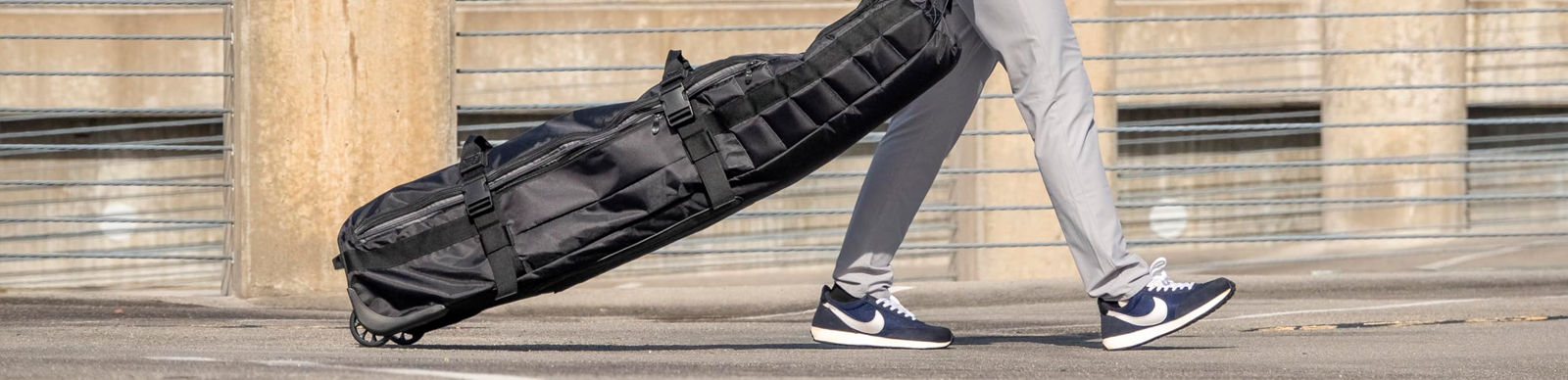
1. Hard Shell vs. Soft Shell Travel Covers: Pros and Cons
Choosing between a hard shell golf travel case and a soft golf travel bag is the first major decision you’ll face, and it’s the one that trips up most golfers. Both types of travel covers have their place, and the right one depends entirely on how you travel.
Option A: Hard Shell Golf Travel Case
Hard shell cases are the tanks of the golf travel world. They feature rigid outer shells made of ABS plastic or similar materials that physically help prevent anything from crushing your clubs. If you’re the kind of golfer who checks a bag and immediately starts thinking about what the baggage handlers are doing to it, a hard case offers maximum peace of mind.
- Best for: Golfers who fly frequently (10+ trips a year) or travel with expensive custom-fit clubs.
- Pros: Maximum impact protection. Your clubs are enclosed in a rigid shell that baggage handlers simply cannot crush. Many models include TSA-approved locks.
- Cons: Heavy (often 15–20+ lbs empty), bulky to store at home or in a hotel room, and significantly more expensive. They also don’t fit easily in smaller rental car trunks.
Option B: Soft Shell Golf Travel Bags
Soft shell covers are by far the more popular choice among recreational golfers, and for good reason. Modern soft covers use heavy-duty nylon (often 1000+ denier) with padded clubhead areas and reinforced bases. When paired with the right accessories (more on that below), they provide excellent protection at a fraction of the weight and cost.
- Best for: Most golfers. Especially those who travel a handful of times per year and want something that’s easy to store, easy to maneuver, and doesn’t eat into your airline weight limit.
- Pros: Lightweight (typically 6–10 lbs), collapsible for easy storage, far more affordable, and most models feature smooth-rolling wheels for easy airport navigation.
- Cons: Less rigid impact protection than hard cases. Without internal support accessories, there’s a risk of the top of the bag folding in on your clubheads.
2. How to Pack Your Golf Clubs for Flying
Even the best golf travel cover won’t protect your clubs if it’s packed incorrectly. The packing method below takes less than ten minutes and dramatically reduces the chance of damage.
- Remove Your Driver Head (If Adjustable): This is the single most important step. Your driver head sits at the very top of the bag and is the most exposed to impact. If your driver has an adjustable hosel, unscrew the head, wrap it in a headcover or towel, and tuck it into one of the travel cover’s side pockets. This alone prevents the most common type of travel damage.
- Use Headcovers on Every Club: Every wood and hybrid should have its headcover on. If you don’t have headcovers for your hybrids, a few extra golf towels wrapped around the heads work in a pinch.
- Install a Stiff Arm: Slide the stiff arm into your golf bag so it extends slightly above the tallest club. The stiff arm acts as a structural brace that prevents the top of the travel cover from collapsing inward and crushing your clubheads.
- Fill the Dead Space: Stuff towels, soft clothing, or bubble wrap around and between the clubheads. The goal is to eliminate any room for the clubs to shift and bang into each other during transit.
- Secure Your Golf Bag Inside the Cover: Most quality travel covers have internal straps or compression systems to lock your golf bag in place. Use them. A bag rattling around inside the cover defeats the purpose of having one.
- Zip It, Strap It, Tag It: Close all zippers completely, fasten any external compression straps, and attach a visible luggage tag with your name, phone number, and destination address.
✈️ What the Airlines Actually Say: Golf Club Policies
All three major U.S. airlines treat your golf bag as one piece of standard checked baggage with no sport equipment surcharge. Oversize fees are waived as long as the bag contains golf equipment, and the universal overweight threshold is 50 lbs. The one thing to watch: United requires a hard-sided case and won't cover damage without one, while Delta and American accept soft-sided golf travel covers.
Check your airline's policy before you fly:
Policies can change — always verify directly with your carrier before you fly.
3. Essential Golf Travel Accessories For Your Golf Travel Bag
Your travel cover is the foundation, but the right travel accessories are what turn “pretty good protection” into “bulletproof.” Think of them as the seat belt and airbag to your travel cover’s car frame.
Luggage Tags (Seriously, Don’t Skip This)
A bright, durable luggage tag is one of the cheapest ways to protect your investment. Golf travel covers all look remarkably similar on a baggage carousel, and the last thing you want is someone grabbing yours by mistake, or your bag getting lost with no way for the airline to contact you.
- Use a tag with a full-size ID card slot. Include your name, cell phone number, email, and destination address.
- Pick a bold color. A neon tag is easier to spot and less likely to be confused with someone else’s bag.
- Attach a second tag inside the cover. If the exterior tag gets ripped off during transit (it happens), the interior tag ensures your bag can still be identified.
Other Worth-It Accessories
- TSA-Approved Lock: This keeps the zippers closed and discourages tampering. TSA agents can open it without cutting it off if they need to inspect.
- Spine/Backbone Protector: Some brands like Bag Boy offer rigid backbone inserts that reinforce the length of the travel cover, adding a second layer of structural support alongside the stiff arm.
- Extra Padding or Towel Wrap: Simply wrapping a bath towel around your clubheads inside the bag provides surprisingly effective cushioning.

4. Travel Bag Cover Brands: Club Glove and Bag Boy Reviewed
There are dozens of travel cover brands on the market, but two names consistently rise to the top when it comes to durability, design, and overall value. Both are available in our Travel shop.
Club Glove
Club Glove has been a prominent name in golf travel for decades. They claim the majority of PGA Tour professionals use their bags when traveling to events, and it isn’t hard to see why once you get your hands on one. The construction uses water-resistant 1000-denier nylon, premium YKK zippers, industrial-strength ITW Nexus buckles, and a high-impact wheelbase with rollerblade-style wheels that glide smoothly across any surface.
Their lineup of golf travel bags includes the Club Traveler (great for standard stand and cart bags), the Pro Traveler (a larger option with a 360-degree velour-lined padded clubhead area), and the College Traveler (a more compact option designed for stand and carry bags). Many Club Glove models include a stiff arm right in the box, which saves you from buying one separately.
- Why golfers love it: Exceptional build quality that holds up trip after trip. Reviewers consistently report that their Club Glove bags last for years of heavy travel with minimal wear.
Bag Boy
Bag Boy is one of the most recognized names in golf bags and carts, and their travel covers offer excellent protection at a more accessible price point. Their T-10 Travel Cover is a popular option that features a padded top for clubhead protection, an internal compression strap to secure the golf bag, and smooth-rolling inline skate wheels.
Bag Boy also makes the Backbone travel support system, a rigid protective spine that slides into the travel cover to reinforce its structure. It’s a smart alternative or complement to the traditional stiff arm.
- Why golfers love it: Solid protection and well-thought-out features at a price that won’t make you wince. Bag Boy covers are a great entry point for golfers who are new to flying with clubs.
5. Pre-Flight Checklist: The 5-Minute Routine That Saves Your Clubs
Run through this list every single time you pack for a golf trip. It takes five minutes and it’s the difference between landing with confidence and landing with anxiety.
☐ Driver head removed and stored separately (if adjustable)
☐ All headcovers on woods and hybrids
☐ Stiff arm installed and adjusted above tallest club
☐ Clubheads padded with towels or clothing
☐ Golf bag secured with internal straps/compression system
☐ All zippers fully closed
☐ External compression straps tightened
☐ Luggage tag attached (exterior AND interior)
☐ TSA-approved lock on main zipper
☐ Bag weighed (most airlines cap at 50 lbs for standard bags)
Pro Tip: Take a quick photo of your packed clubs before you seal the cover. If anything arrives damaged, you’ll have visual proof of how the bag was packed when you handed it to the airline. This can help enormously with damage claims.
Choosing The Best Travel Cover For Your Peace of Mind
The “best” golf travel bag isn’t necessarily the most expensive one or the one with the most features. It’s the one that matches how you travel and gives you genuine confidence that your clubs will arrive safe. A quality soft shell cover, a stiff arm, and ten minutes of thoughtful packing is all it takes for the vast majority of golfers.
Golf trips are supposed to be about getting away, playing great courses, and making memories with friends. The last thing on your mind when you step off the plane should be the condition of your equipment. Get the right travel setup, pack it properly, and the only thing you’ll need to worry about is your first tee shot.