
Golf Bag Types Explained: How to Choose the Right Golf Bag for Your Game
Posted by Danny on Jul 21st 2026
Shopping for a new bag starts simple and gets confusing fast. One product page says stand bag, the next says cart bag, then carry, staff, and travel bags join the party, and suddenly you're not sure which one you're even supposed to be looking at. Understanding the main golf bag types clears that up quickly, because each type is built for a specific way of getting around the course.
That's the good news. Your decision is less about brands and features and more about one honest question: do you walk, ride, or both? Answer that, and the right bag type practically picks itself. This buying guide breaks down the five most common types of golf bags and matches each one to the golfer it serves best.
Table of Contents
- The Five Main Golf Bag Types at a Glance
- Stand Bags vs Cart Bags: What's the Difference?
- Carry Bags, Staff Bags, and Travel Bags Explained
- How Playing Style and Frequency Affect Your Choice
- Match the Bag Type to Your Game
The Five Main Golf Bag Types at a Glance
Before we dig into the details, here's the short version. Most bags you'll see fit into five common categories, and each one answers a different question about how you play.
Golf Bag Types by Weight and Best Use
Weights compared within the category. Individual models vary, so check the spec sheet on any bag you're considering.
Notice that a travel bag isn't really a competitor to the other four. It's a protective shell your regular bag rides inside when you fly or ship your clubs. So the real decision comes down to the four course bags, and usually to the two main choices for most golfers: stand bags and cart bags. One caveat before you commit: hybrid golf bags blur the line between stand and cart bags, so golfers who walk and ride should compare hybrid models too.
Stand Bags vs Cart Bags: What's the Difference?
If you only remember one comparison from this guide, make it this one. The stand bags vs cart bags question is where most golfers land, and the difference comes down to who does the carrying: you or the cart.
Stand Bags: Built for Walkers
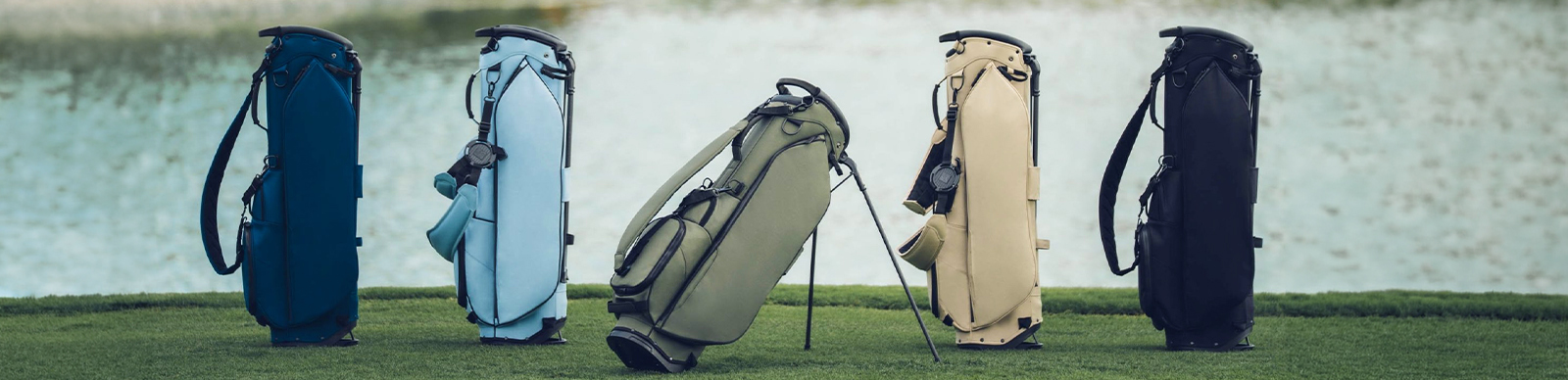
A stand bag is designed to be carried on your back. It has retractable legs that pop out when you set the bag down, so it stands upright at an angle on the tee box or beside the green, and often dual or convertible shoulder straps that spread the weight more comfortably while walking. Many stand bags weigh around 4 to 6 pounds, striking a balance between comfort and features.
What you get with a good stand bag:
- Built-in legs: No laying the bag flat in wet grass or hunting for something to lean it against.
- Comfortable straps and padding: Dual or convertible strap systems make for an easier carry over 18 holes, which usually adds up to a few miles of walking.
- Enough storage for a full round: Fewer pockets than a cart bag, but plenty of room for balls, a layer, valuables, and snacks.
The tradeoff is capacity. A stand bag usually can't match a cart bag for usable storage volume and cart-accessible pocket layout, and on many models the slimmer top means clubs sit a little closer together. Divider counts vary widely from bag to bag, and plenty of modern stand bags now offer 14-way top dividers, so check the spec on any bag you're eyeing.
Cart Bags: Built to Ride
A cart bag is designed primarily for riding carts and push carts. Since the cart does the hauling, the bag can afford to be bigger and heavier, typically about 6 to 9 pounds, and loaded with storage. There are no legs, and the base is flat and stable so it sits securely on a cart.
What you get with a good cart bag:
- Maximum storage: More pockets, bigger pockets, and often extras like insulated cooler sleeves and oversized apparel compartments.
- Full organization: 14-way or 15-way tops with full-length dividers are common on many cart bags, so every club gets its own channel.
- Cart-smart layout: Pockets face outward so everything stays reachable while the bag is strapped down.
The tradeoff is obvious the moment you try to carry one. Cart bags are much less comfortable to carry for long stretches, and without legs, they do not pop open into an angled stand position on the turf.
What’s Your Golf Bag Match?
If you walk most of your rounds, choose a stand bag. If you ride or push most of your rounds, choose a cart bag. If you genuinely split your time, a hybrid stand bag with a cart-friendly base and a strap pass-through channel gives you a workable middle ground, though it won't beat either dedicated type at its own game.
Carry Bags, Staff Bags, and Travel Bags Explained
The other three golf bag types serve more specific jobs. One strips the game down to essentials, one dresses it up to tour standards, and one never actually sees the course.
Carry Bags: The Minimalist's Choice
A carry bag (sometimes called a Sunday bag or pencil bag) is the lightest option out there, often just 2 to 4 pounds. Some have simple stands, some don't, and storage is intentionally lean: a pocket or two for balls, tees, and not much else. Many golfers use one as a second bag for walking nine after work, hitting the range, or playing a short par-3 course with a partial set. If you like the idea of golf as a long walk with a few clubs, this is your bag.
Staff Bags: The Tour Look
A staff bag (also called a tour bag) is the big, round-bodied bag you see on professional tours, typically the heaviest bag style, often built for caddie or cart use. It offers a huge amount of storage, premium materials, and a full-size top with room for every club to breathe. The catch: tour players have caddies. Unless you always ride, always use a push cart, or have a very patient friend, a staff bag is a lot of bag to move around. For golfers who love the look and ride every round, though, nothing else feels quite like it.
Travel Bags: Protection in Transit
A travel bag is the one type on this list you'll never sling over your shoulder on the course. It's a padded soft case or rigid hard case that your regular bag and clubs ride inside when you fly, ship your clubs, or load up for a long road trip. Soft covers are lighter and easier to store at home, while hard cases offer more crush protection at the cost of weight and bulk. Pair either with a support device like a stiff arm from the travel accessories shop to protect club heads from baggage handling. A travel bag is highly useful if you fly or ship your clubs, and it protects everything else in your bag along the way.

How Playing Style and Frequency Affect Your Choice
Knowing the categories is half the battle. The other half is being honest about your own golf life, because the right bag for a twice-a-year vacation golfer is different from the right bag for someone walking three rounds a week.
Run yourself through these four questions:
- How do you get around the course? Mostly walking points to a stand bag (or a carry bag if you pack light). Mostly riding or pushing points to a cart bag. A true split points to a hybrid stand bag.
- How often do you play? Frequent golfers feel every design decision, good and bad, dozens of times a season, so it's worth prioritizing comfort and organization. Occasional golfers can lean toward versatility, since one adaptable bag covers more situations.
- How much do you bring? If your round involves a rangefinder, rain gear, a cooler pocket, and backup everything, cart bag storage will make you happy. If you carry a sleeve of balls and good intentions, don't pay for pockets you'll never fill.
- Do you travel with your clubs? If yes, a travel cover belongs in your plans regardless of which primary bag you choose.
One more factor worth naming: your bag and your transportation are a system. If you're considering a push cart and a new bag at the same time, choose them together. A cart bag with a flat base and outward-facing pockets pairs beautifully with a push cart, while a round-bottomed bag can twist and slide on the same frame.
And if you're buying a first bag for a newer golfer, a stand bag is usually the safest call. It works walking or riding, stands on its own at the range, and doesn't commit anyone to a style of play they haven't discovered yet. For more on that, our beginner bag setup guide walks through it step by step.
Keep Reading From the GolfBags.com Blog
What to Look for in a Golf Bag: Features That Matter Most → Once you know your bag type, this guide covers the dividers, pockets, and straps that matter. The Best Golf Bag Setup for Beginners → A simple, stress-free guide to setting up your first bag the right way. Recommended Lightweight Stand Bags for Walkers → Where comfort meets durability if walking is your game. Golf Travel Bags Selection Guide → How to choose a travel cover and keep your clubs safe in transit.Frequently Asked Questions
What are the main types of golf bags?
The five main golf bag types are stand bags, cart bags, carry bags, staff bags, and travel bags. Stand bags are built for walkers, cart bags for riders and push cart users, carry bags for minimalists, and staff bags for golfers who want tour-level storage and looks. Travel bags are protective cases that carry your regular bag and clubs when you fly or ship them.
What is the difference between a stand bag and a cart bag?
A stand bag is lighter (many weigh around 4 to 6 pounds), has retractable legs, and often uses dual or convertible shoulder straps so it carries comfortably while walking. A cart bag is heavier (typically about 6 to 9 pounds), has no legs, and offers more storage with a flat base and outward-facing pockets designed to sit strapped to a riding or push cart. Choose based on how you most often get around the course.
Can I use a stand bag on a golf cart?
Yes, a stand bag works fine on a riding or push cart, though some sit less securely than a true cart bag and the cart straps can block certain pockets. If you regularly split time between walking and riding, look for a hybrid stand bag with a cart-friendly base and a strap pass-through channel so it works well both ways.
What is a Sunday bag or carry bag?
A carry bag, sometimes called a Sunday bag or pencil bag, is an ultralight bag that typically weighs 2 to 4 pounds with minimal storage. It's ideal for walking a quick nine, hitting the range, or playing a short course with a partial set of clubs. Many golfers keep one as a second bag alongside a full-size stand or cart bag.
Are staff bags worth it for regular golfers?
Staff bags offer huge storage, premium materials, and the classic tour look, but they are typically the heaviest bag style and are designed with caddies and carts in mind, making them impractical to carry for a full round. They make the most sense for golfers who ride every round and want maximum room and style. If you walk even occasionally, a stand bag or cart bag is usually the more practical choice.
Do I need a travel bag for my golf clubs?
If you ever fly with your clubs or ship them, yes. A travel bag is a padded soft cover or rigid hard case that protects your regular bag and clubs in transit. Soft covers are lighter and easier to store, hard cases offer more crush protection, and adding a support device like a stiff arm helps protect club heads from rough baggage handling.
Match the Bag Type to Your Game
Every golf bag type on this list is the right answer for somebody. Stand bags reward the walker, cart bags reward the rider, carry bags reward the minimalist, staff bags reward the golfer who wants the full tour treatment, and travel bags protect all of the above the moment your clubs leave home.
So skip the spec-sheet rabbit hole and start with the honest question: how do you actually get around the course, and how often? Answer that, pick the matching type, and then fine-tune from there with the dividers, pockets, and straps that fit your routine. Do it in that order, and you'll end up with a bag that fits your game so well you forget it was ever a decision.