
How to Store Your Golf Bag and Clubs for Winter
Posted by Danny on Oct 30th 2026
The first warm Saturday of spring finally shows up. You head to the garage, pull your bag out from behind the snow shovel, and the smell hits you before you even touch a zipper. The towel you stuffed in the ball pocket back in November has grown something. The glove has dried into a stiff little taco. And the valuables pocket won't open, because its zipper spent four months sealed shut around a damp rain jacket.
Here's the thing: none of that is really winter's fault. Cold on its own is fairly easy on golf gear. What wrecks bags and clubs over the off-season is moisture trapped where it can't escape, big temperature swings, and a few months of nobody looking. Fixing all three for proper off-season golf gear storage takes about an hour in the fall, and most of it you can do with a game on in the background.
Below is a simple ten-step routine for storing your golf bag, clubs, push cart, gadgets, and all other golf gear for winter, where to keep them (and where not to), and a quick checklist for waking everything up in the spring.
Quick Answer: How Do You Store a Golf Bag and Clubs for Winter?
To store a golf bag for winter, empty every pocket, clean the bag and let it air-dry completely with the pockets unzipped. Clean your clubs and wipe any forged irons, raw wedges, or carbon steel putters with a light coat of oil. Put headcovers on your woods, hybrids, and putter, and store everything upright and off the floor in a dry, temperature-stable indoor spot like a closet or finished basement. Avoid car trunks, sheds, and damp unheated garages. Pull the batteries out of rangefinders, GPS units, and electric push carts, and store those indoors too.
Table of Contents
- Winter Golf Gear Storage at a Glance
- Prepping Your Golf Bag for Winter
- Prepping Your Clubs for Storage
- Where to Store Golf Clubs in Winter
- Storing Push Carts, Electronics, and Golf Balls
- Your Spring Wake-Up Checklist
- Frequently Asked Questions
Winter Golf Gear Storage at a Glance
Here's the whole routine in one place. If you only have five minutes, this table alone covers the parts that matter most.
10 Steps to Store Your Golf Gear for Winter
What each step protects against, and how to put it into practice before the bag goes into storage.
| The Step | Why It Matters | How To Do It |
|---|---|---|
| 1. Empty every pocket | Old towels, gloves, and snacks hold moisture and odor for months | Unload everything, then turn the bag over and shake out the base |
| 2. Clean and dry the bag | Dirt and sweat break down fabric and feed mildew | Wipe or vacuum the bag, then air-dry it upright for a full day or two |
| 3. Leave pockets unzipped | Closed pockets trap humid air against linings and zipper teeth | Store every pocket open and run each zipper once to check it |
| 4. Clean clubs and check grips | Dirt and fertilizer hold moisture against clubheads, and the off-season is the easiest time to regrip | Warm soapy water, a soft brush, and a full dry before storage |
| 5. Protect raw steel from rust | Forged irons, raw wedges, and carbon steel putters rust the fastest | Wipe on a thin coat of light oil, then buff off the excess |
| 6. Cover woods, hybrids, and putter | Stored bags get bumped by holiday boxes, bikes, and kids | Headcover on every wood and hybrid, plus a putter cover |
| 7. Pick a dry, stable spot | Temperature swings cause condensation, rust, and cracked grips | Closet, finished basement, or another climate-controlled room |
| 8. Store upright and off the floor | Concrete floors pull cold and moisture into the bag base | Use a sturdy shelf, wall rack, or wooden board, with the rain hood on top |
| 9. Prep your push cart | Batteries can drain too low over a long layoff | Remove the battery, charge it to the maker's storage level, keep it indoors |
| 10. Pull batteries from electronics | Old batteries can leak and corrode contacts | Remove disposable batteries and store devices inside |
Most of these take five minutes or less. If you only do one, do Step 7, because the right storage spot makes most of the others less critical.

Prepping Your Golf Bag for Winter
The bag is where most off-season damage starts, because it's full of fabric, foam, and pockets that are great at holding onto moisture. Get the bag right and the clubs inside it are already halfway protected.
Step 1: Empty Every Single Pocket
Open any golf bag in late October and you'll find a full season of evidence. Half a sleeve of balls you forgot about. Three gloves, two of them crunchy. A banana that was a good idea in July. Scorecards from a round you'd rather not remember.
All of it needs to come out, not just the obvious stuff. Damp towels and sweaty gloves are the biggest offenders, since they hold moisture against the lining for months and are usually the source of that basement smell in spring. Food is the other problem. Anything edible left in a garage over winter is an open invitation to mice, and a mouse that moves into your cart bag will happily chew through a pocket to get to a granola bar.
Once everything is out, flip the bag upside down and shake it. You'll be amazed how much sand, grass, and broken tee has collected in the base. This is also a perfect time to sort your gear into keep, toss, and restock piles, so you know exactly what to buy before spring.
Step 2: Clean the Bag and Let It Dry Completely
A season's worth of dirt, sunscreen, and sweat sitting on nylon or polyester all winter slowly breaks down the fabric and coatings. It also gives mildew something to feed on.
Cleaning is simple. Vacuum out the pockets and the club well, then wipe the outside with a damp cloth and a little mild soap. Pay attention to the base and the stand legs, where dried mud collects. For a deeper clean, our golf bag maintenance guide walks through fabric, leather, and synthetic materials.
The drying part is the step most golfers rush, and it's the one that matters. Stand the bag upright somewhere with air moving and let it dry for a full 24 to 48 hours before it goes into storage. A bag that feels dry on the outside can still be damp inside the padded straps and the base.
Step 3: Leave the Pockets Unzipped and Check Every Zipper
A zipped pocket is a sealed box of whatever air was in it when you closed it. If that air was humid, it stays humid against the lining and the zipper teeth all winter.
Store the bag with every pocket open. Before you do, run each zipper end to end once. If one is sticky, brush the teeth with an old toothbrush to clear out grit, and fix it now rather than finding out on the first tee in April. A stuck zipper is a small annoyance in October and a real headache when you're trying to get a glove out in front of your foursome.
Prepping Your Clubs for Storage
Golf clubs are tougher than they look, but they have two weak spots over a long layoff: rust on bare steel and grips that dry out or break down. Both are easy to prevent.
Step 4: Clean Your Clubs and Check the Grips
Dirt in the grooves isn't just a spin problem. Caked-on soil holds moisture right against the clubface, and course fertilizer is particularly good at encouraging rust. Leave it on all winter and you'll see the results in spring.
Fill a bucket with warm water and a squirt of mild dish soap. Soak only the irons and wedges for a few minutes, keeping the water below the ferrules, then scrub the faces and grooves with a soft-bristle brush. Wipe your woods and hybrids with a damp cloth instead of soaking them. Dry everything thoroughly with a golf towel, paying extra attention to the hosels and the spot where the shaft meets the head. A good club cleaning kit makes this a ten-minute job.
While you're at it, wash the grips with the same soapy water and a cloth, then rinse and air-dry them. Clean grips last longer and feel tackier. If yours still feel slick or look shiny and worn after washing, the off-season is the perfect time to regrip, since you won't miss any rounds while they're at the shop. A common rule of thumb is to regrip about once a year or every 40 rounds, whichever comes first.
Step 5: Protect Forged Irons, Raw Wedges, and Steel Putters From Rust
Not every club needs extra help here. Most stainless steel cavity-back irons and modern drivers will sit through a winter just fine once they're clean and dry.
The clubs to worry about are forged carbon steel irons, raw-finish wedges that are designed to rust, and carbon steel putters. Rust spreads faster than you'd expect over a few months in damp air, and a rusty wedge can transfer it to the clubs next to it.
The fix takes about thirty seconds per club. Put a few drops of light oil or a silicone-based protectant on a soft cloth, wipe a thin layer over the clubhead, and buff off the excess so it isn't sticky. Keep it off the grips. Before your first round in spring, wipe the heads clean with a dry towel.
Step 6: Put Headcovers on Woods, Hybrids, and Your Putter
A stored golf bag lives a surprisingly rough life. It gets shuffled around holiday decorations, leaned against bikes, and knocked over by whoever's digging for the camping cooler. Every bump moves the clubheads against each other.
Put a headcover on your driver, fairway woods, and hybrids before the bag goes into storage, and don't forget the putter. Putter faces and toplines scratch easily, and a nick on the face is the last thing you want to stare down at over a three-footer. If you're missing a cover or two, grab them now so the set is complete.
Where to Store Golf Clubs in Winter
The best place to store golf clubs in winter is a dry, temperature-stable room inside your house. Where the bag spends the winter matters more than any other single step, because a good spot protects against nearly every problem on this list.
Step 7: Pick a Dry, Temperature-Stable Spot
Steady cold isn't the real enemy. The damage comes from swings in temperature and humidity. When a cold garage warms up on a sunny afternoon, moisture condenses on metal clubheads and soaks into fabric, then freezes or sits there overnight. Repeat that a few dozen times and you get rust spots, mildew, and grips that dry out and crack. Extreme heat isn't much better, since it softens grip rubber and breaks down the adhesives in your bag.
Storage Guide
Best and Worst Places to Store a Golf Bag for Winter
How common storage spots stack up for bags, clubs, and grips over a long off-season.
| Location | Verdict | Why |
|---|---|---|
| Bedroom or hall closet | Best | Stable temperature and low humidity all winter |
| Finished basement | Great, if dry | Steady temperatures, but run a dehumidifier if it ever smells musty |
| Spare room or home office | Great | Climate-controlled, and easy to check on your gear |
| Attached, insulated garage | OK | Fine if it stays dry and avoids hard freezes; keep the bag off the floor |
| Detached or unheated garage | Not ideal | Big temperature swings and condensation are hard on grips and steel |
| Shed or outbuilding | Avoid | Humidity, freezing temperatures, and rodents |
| Car trunk | Avoid | Wild temperature swings, trapped moisture, and an easy target for theft |
If the garage is your only option, choose the driest corner away from the main door, keep the bag off the concrete, and check it once a month. And if your clubs live in the trunk all season, winter is the time to finally bring them inside.
Step 8: Store the Bag Upright and Off the Floor
Concrete floors are cold and hold moisture, and a bag sitting directly on one pulls both into its base all winter. Laying the bag flat isn't great either, since it puts pressure on the clubs, the dividers, and the top cuff, and it's the position most likely to get something heavy stacked on top of it.
Stand the bag upright on a sturdy shelf, a wooden board, or a wall-mounted rack. If you have room, keep your cart, shoes, and spare gear stored right next to it so everything is in one spot when spring comes around. Then pull the bag's rain hood over the top. It doubles as a dust cover and keeps anything from falling into the club well.
Planning a winter golf trip? Grab your clubs out of storage early and check our golf travel bag guide before you fly.
Storing Push Carts, Electronics, and Golf Balls
The bag and clubs get all the attention, but carts and gadgets are often the most expensive things in your golf setup. They also have batteries, which don't love being ignored for four months.
Step 9: Prep Your Push Cart or Electric Cart
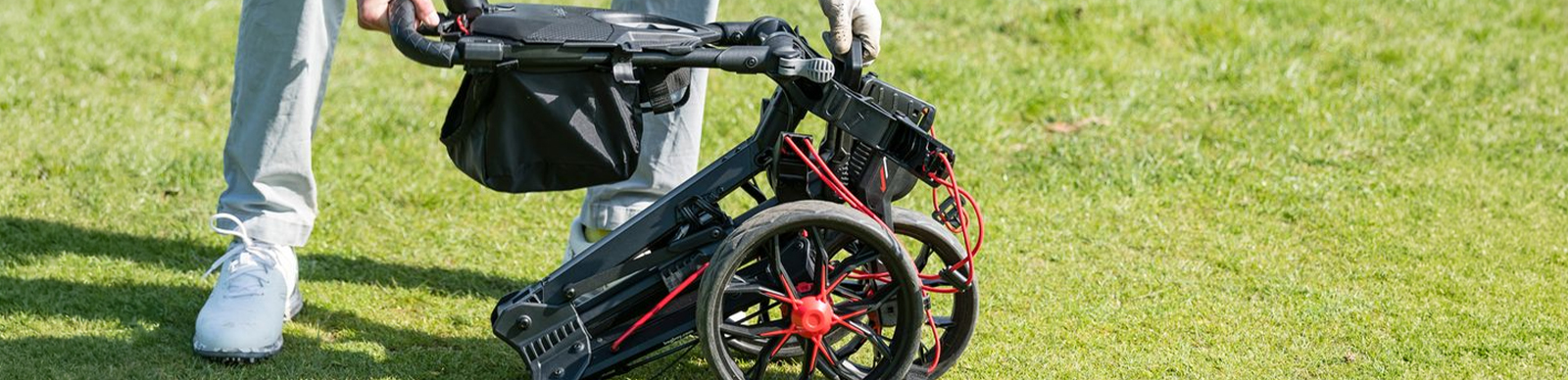
For a standard push cart, the job is mostly cleaning. Knock the mud and grass off the wheels and frame, wipe down the bag bracket and straps, and check the tires. If your cart has air-filled tires, top them up so they don't flat-spot. Fold it and store it indoors with your bag if you can, since wheel bearings and folding joints don't appreciate a damp shed either.
Electric carts need one extra step: the battery. Take it off the cart and store it indoors at room temperature, not in a freezing garage. Charge level matters, and it depends on the battery type, so check your manual first. Lead-acid batteries should be stored fully charged and topped up monthly. Lithium battery guidance varies by manufacturer. Trojan Battery recommends a full charge before long-term storage, while other makers like Vatrer suggest a 50 to 70 percent charge. What nearly every maker agrees on: never store a battery empty, and check it every month or two over the winter.
While you have the cart out, look over your cart accessories. Umbrella holders, scorecard holders, and cup holders all collect grime and are easy to clean or replace now.
Step 10: Pull the Batteries From Your Electronics
Rangefinders, GPS units, and speakers usually spend the season zipped into a bag pocket, which is exactly where they get forgotten. Old disposable batteries left in a device for months can leak and corrode the contacts, turning a simple battery swap into a dead rangefinder.
Take disposable batteries out of anything that uses them and store the devices indoors, not in the bag in the garage. For rechargeable gear like GPS watches, give them a partial charge before storage and top them up every couple of months. Come spring, charge everything fully and check for firmware and course map updates before your first round.
What About Golf Balls?
Golf balls are pretty forgiving. Kept at normal indoor temperatures, they'll hold up just fine over the winter. The main thing to avoid is long stretches in extreme heat or cold, so pull those spare sleeves out of the bag along with everything else and keep them inside. If you play a winter round and your balls have been sitting somewhere cold, let them warm up first, since a cold ball feels firmer and won't travel as far.
Your Spring Wake-Up Checklist
If you stored everything the right way, spring prep takes about fifteen minutes. Run through this list a week or so before your first tee time, not the morning of.
- Wipe the clubheads. Remove any protective oil from forged irons, wedges, and putters with a dry towel.
- Check the grips. Look for cracks, hard spots, or slickness. Wash them again if they feel dusty.
- Inspect the bag. Run every zipper, extend the stand legs a few times, and check the straps for stiffness or wear.
- Restock the pockets. Balls, tees, a fresh glove, ball markers, and a divot tool. Load heavy items low, following our golf bag packing tips.
- Charge your electronics. Fully charge rangefinders, GPS units, watches, and cart batteries, and install any updates.
- Reset your straps. Adjust them for spring layers instead of winter coats.
- Look for anything missing. A lost headcover or a cracked umbrella is easier to replace before the season than in the middle of it.
For help putting everything back where it belongs, see how to organize your golf bag like a pro.
FAQ
Frequently Asked Questions
Quick answers to the questions golfers ask most about storing golf bags and clubs over the winter.
Can I leave my golf clubs in the garage over the winter?
You can, but it isn't ideal. An unheated garage goes through big temperature and humidity swings, which cause condensation on clubheads and dry out grips. If the garage is your only option, clean and dry everything first, keep the bag upright and off the concrete, and check on it monthly. A closet or finished basement is better.
Does cold weather damage golf clubs?
Steady cold by itself rarely damages clubheads or shafts. The bigger risks are moisture and temperature swings, which lead to rust on bare steel and cracked, hardened grips. Clubs stored clean, dry, and indoors will come out of winter in the same shape they went in.
Should I store golf clubs in the bag or take them out?
Storing clubs in the bag is fine and is what most golfers do. The bag's dividers and padding protect the clubs from bumps. Just make sure both the clubs and the bag are completely dry first, the pockets are unzipped, and headcovers are on your woods, hybrids, and putter.
How do I keep golf clubs from rusting in storage?
Clean the clubs, dry them thoroughly, and store them somewhere with low humidity. For forged carbon steel irons, raw wedges, and carbon steel putters, wipe on a thin coat of light oil or silicone protectant before storage and buff off the excess. Wipe it off with a dry towel before your first round.
Is it OK to store a golf bag lying down?
It's better to store a golf bag standing upright. Lying flat puts pressure on the clubs, dividers, and top cuff, and the bag is more likely to get stepped on or have boxes stacked on top of it. A sturdy shelf, wall rack, or wooden board keeps it upright and off the floor.
How should I store an electric push cart battery over the winter?
Remove the battery from the cart and store it indoors at room temperature. Charge it to the level your cart's manufacturer recommends for storage, since lithium guidance varies by brand. Never store it fully drained, and check the charge every month or two until spring.
What's the best temperature for storing golf clubs?
Any room that stays at normal indoor temperatures all winter, with low humidity, works well. Stability matters more than an exact number. A spot that stays steady is much safer than one that freezes at night and warms up in the afternoon sun.
Shop GolfBags.com
Gear Up for Next Season
Put It Away Right, Pull It Out Ready
Notice what's not on this list: anything complicated. Winter storage comes down to three things. Get the moisture out, keep the temperature steady, and don't forget about the stuff with batteries.
An hour in the fall saves you from the spring surprises that cost real money. Mildewed linings, rusted wedges, cracked grips, and a cart battery that won't take a charge are all avoidable, and none of them are fun to discover the week your course opens.
So empty the pockets, dry everything out, find it a good spot inside, and let your gear rest up for the season ahead. And if you pull your bag out in spring and decide it's finally time for an upgrade, we've got you covered.